 EN
EN

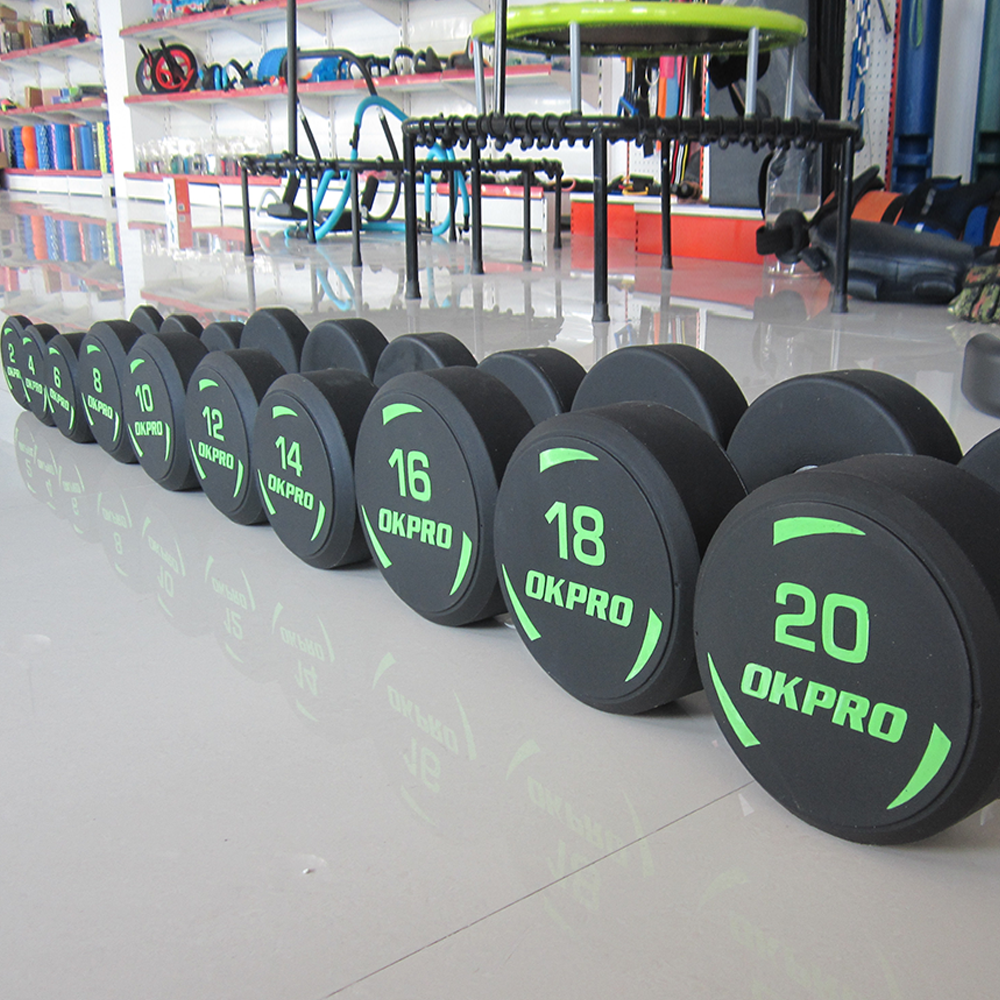
In the competitive fitness equipment market, sourcing a high-quality PU dumbbell directly from the factory has become a strategic priority for gym operators, equipment distributors, and fitness facility developers worldwide. The shift toward factory-direct supply is not simply about cost reduction — it is fundamentally about gaining direct control over engineering quality, material consistency, and product balance. When procurement teams bypass multiple intermediaries, they gain access to the technical specifications and manufacturing processes that determine whether a PU dumbbell will perform reliably over years of intensive use.

The precision engineering behind a professional-grade PU dumbbell is more complex than its compact form might suggest. From the internal iron core casting to the polyurethane overmolding process, every production stage contributes to the final balance, durability, and feel of the product. Understanding what factory-direct supply truly means in the context of PU dumbbell manufacturing helps buyers make better-informed decisions, negotiate more effectively, and ultimately deliver superior equipment to their end users. This article explores the engineering principles, supply chain advantages, and quality considerations that define best-in-class PU dumbbell production.
What Factory-Direct PU Dumbbell Supply Actually Means
Beyond the Price Advantage
The term factory-direct is often used loosely in fitness equipment sourcing, but in the context of PU dumbbell supply, it carries specific technical and commercial implications. True factory-direct procurement means the buyer is engaging directly with the manufacturing facility responsible for casting, molding, grinding, and finishing each PU dumbbell unit. This eliminates trading companies and agents who, while useful in some contexts, often lack visibility into production tolerances and quality control workflows.
When a distributor or gym chain sources a PU dumbbell directly from the producing factory, they gain the ability to audit production processes, specify material grades, and request documentation on weight accuracy standards. This level of engagement translates directly into product consistency — a critical factor when equipping a multi-station commercial gym where mismatched dumbbell weights create both safety issues and user dissatisfaction.
The price advantage of factory-direct supply is real and significant, but it should be viewed as a secondary benefit. The primary value lies in the technical partnership that becomes possible when procurement teams communicate directly with the engineers and production managers who build each PU dumbbell to specification.
The Supply Chain Structure Behind PU Dumbbell Production
A professional PU dumbbell supply chain begins with raw material procurement — specifically, virgin polyurethane compounds and high-density iron or steel alloy for the internal weight core. Factories that supply these products at a professional level maintain strict supplier relationships for both input materials, as the quality of the PU coating and the accuracy of the iron core casting are the two primary determinants of finished product quality.
From raw material intake through casting, CNC grinding, surface treatment, and PU overmolding, a well-structured factory operates with quality checkpoints at every stage. Buyers who access the factory directly can request data from these checkpoints, ensuring that the PU dumbbell sets they receive have passed defined tolerance standards rather than relying solely on visual inspection at the point of delivery.
Factory-direct supply also enables more responsive customization. Whether a client needs logo engraving, specific weight increments, or custom handle diameter profiles, direct communication with the production team reduces the translation errors that occur when requirements are filtered through an intermediary. This is particularly valuable for premium gym brands and hotel fitness centers that require a consistent, branded equipment experience.
Precision Engineering in PU Dumbbell Manufacturing
Weight Accuracy and Internal Core Casting
Precision engineering in PU dumbbell production starts at the foundry level. The internal iron core must be cast to a weight tolerance that typically falls within plus or minus one to two percent of the stated nominal weight. Achieving this requires calibrated molds, controlled pouring temperatures, and systematic post-cast grinding to bring individual cores to their target mass before the polyurethane shell is applied.
In lower-quality production environments, the iron core may be cast with excessive tolerance variance, and the weight discrepancy is then compensated for by adjusting the thickness of the PU coating — a practice that compromises both the structural integrity of the coating and the dimensional consistency of the finished PU dumbbell. Professional factories treat the core casting and the coating as separate precision processes, each held to independent standards.
This level of engineering discipline is what separates a durable, professional-grade PU dumbbell from a commodity product. For gym equipment buyers, understanding this distinction is essential because weight inaccuracy is one of the most common complaints in commercial fitness environments and one of the earliest indicators of compromised manufacturing standards.
CNC Grinding and Surface Preparation
Once the iron core is cast and verified, CNC grinding is applied to achieve precise dimensional consistency across all weight increments in a set. This step ensures that handles align uniformly, rack storage profiles remain consistent, and the subsequent PU coating adheres evenly across the entire surface of the PU dumbbell. Factories equipped with CNC grinding capacity can maintain tighter tolerances than those relying on manual grinding alone.
Surface preparation before polyurethane application is equally critical. Shot blasting or chemical etching creates a micro-textured surface on the iron core that promotes strong mechanical bonding between the metal substrate and the PU compound. Without this step, the coating may develop separation points under repeated impact or temperature cycling — a failure mode that renders the PU dumbbell visually defective and structurally compromised.
Professional factories document each of these preparation steps and can provide buyers with process specifications on request. For large-volume orders, this documentation becomes part of the quality assurance package that supports product liability protection and brand reputation management for the end distributor or gym operator.
The Role of Polyurethane Material Grade in Balance and Durability
Virgin PU vs. Recycled Compound
The polyurethane grade used in a PU dumbbell has a direct impact on both its physical balance and its long-term durability. Virgin polyurethane compounds offer consistent density and elasticity profiles, which translate into uniform coating thickness across all units in a production run. This consistency is essential for balance — a PU dumbbell with uneven coating density will exhibit subtle but detectable weight distribution asymmetry that experienced lifters will notice immediately.
Recycled or blended PU compounds are used in lower-cost production to reduce material costs, but they introduce variability in density, color consistency, and surface hardness. Over time, dumbbells produced with lower-grade PU compounds show faster surface degradation, including cracking, peeling, and odor development — all of which are quality signals that reflect poorly on the distributor's brand.
When evaluating a factory-direct PU dumbbell supplier, requesting material safety data sheets and compound specifications for the polyurethane used in production is a reasonable and professional step. Reputable factories will provide this documentation without hesitation, as it supports the quality positioning of their product in premium fitness markets.
Shore Hardness and Surface Performance
Shore hardness is the technical measure of polyurethane surface resistance to indentation and is a key specification for evaluating PU dumbbell durability in commercial environments. A professional-grade PU dumbbell typically targets a Shore A hardness range that provides sufficient rigidity to maintain shape under repeated drops while retaining enough surface compliance to protect gym flooring and reduce noise impact.
Factories that engineer their PU compounds for specific Shore hardness profiles demonstrate a higher level of material science capability than those producing dumbbells with undefined or inconsistent hardness values. This specification becomes particularly important for facilities that operate high-intensity training programs where dumbbells are routinely placed under stress that would rapidly degrade a softer or lower-hardness coating.
Buyers sourcing a PU dumbbell for premium commercial use should request Shore hardness test results as part of the product quality documentation package. This single data point reveals a great deal about the engineering philosophy of the factory and the long-term performance expectations of the product under real-world gym conditions.
Balance Engineering and Handle Design Precision
Center of Gravity and Symmetrical Weight Distribution
A well-engineered PU dumbbell achieves precise balance by ensuring that the center of gravity is located at the geometric midpoint of the handle. This symmetry is the result of careful iron core design, where each head of the dumbbell is cast to equal mass before the connecting handle element is integrated. Any deviation from symmetrical mass distribution will be felt immediately during use, creating an uneven lifting experience that signals poor engineering.
Achieving this balance at scale — across a full range of weights from two kilograms to fifty kilograms or beyond — requires that the factory applies consistent engineering principles across every weight increment in the product line. This is technically more demanding than it appears, because the ratio of head mass to handle length changes across the weight range, requiring recalibrated casting and grinding protocols for each increment.
For buyers specifying a complete PU dumbbell set for a commercial gym installation, verifying balance consistency across the full weight range is an important quality check. Requesting sample units from multiple weight increments and conducting basic balance assessments before placing a large order is a practical way to validate the factory's engineering capability before full commitment.
Handle Ergonomics and Grip Engineering
The handle of a PU dumbbell is the primary interface between the equipment and the user, and its engineering deserves careful attention. Handle diameter, knurling depth, length, and surface finish all contribute to grip security, fatigue resistance, and overall training experience. A professional factory will have defined specifications for each of these parameters and will maintain them consistently across production runs.
Chrome-plated or black oxide-finished steel handles are standard in professional PU dumbbell designs, providing corrosion resistance and a tactile grip surface. The knurling pattern applied to the handle must be aggressive enough to provide secure grip under wet or perspiration-heavy conditions, yet refined enough to avoid causing skin abrasion during extended training sessions.
When sourcing factory-direct, buyers have the opportunity to specify handle geometry and surface finish to match their target user profile. A boutique fitness studio serving a premium clientele may prioritize a refined, moderate knurl with polished chrome finish, while a high-volume sports performance facility may require a more aggressive knurl for maximum grip under load. Factory-direct engagement makes this level of customization both possible and practical.
Quality Assurance and Testing Protocols in PU Dumbbell Production
In-Process Quality Control Standards
A factory committed to producing a precision-grade PU dumbbell implements quality control at every stage of the production process, not only at the final inspection point. In-process controls include dimensional verification of cast cores before grinding, weight verification after grinding, adhesion testing after surface preparation, and Shore hardness sampling after PU application. This multi-stage approach ensures that defects are caught and corrected before they compound through subsequent production steps.
Factories operating under ISO 9001 certification or equivalent quality management frameworks are more likely to maintain structured, documented quality control systems. While certification alone is not a guarantee of product quality, it is an indicator of process discipline and management commitment to consistency — both of which matter significantly when purchasing PU dumbbell inventory in large volumes.
For buyers placing recurring orders, establishing agreed-upon acceptance criteria and requesting batch test reports with each shipment provides an additional layer of quality assurance. This documentation practice also supports traceability in the event that a quality issue emerges in the field, enabling faster root cause analysis and resolution.
Drop Testing and Long-Term Durability Validation
Commercial fitness equipment undergoes significant mechanical stress over its service life, and a professional-grade PU dumbbell must be validated for durability under realistic use conditions. Drop testing — in which units are repeatedly dropped from defined heights onto standard flooring surfaces — is the primary method used to assess coating adhesion, core integrity, and handle connection durability under impact loading.
Factories that conduct and document structured drop testing provide buyers with objective evidence of product durability rather than relying solely on material specifications or visual quality claims. A PU dumbbell that passes rigorous drop testing protocols is demonstrably more likely to maintain its appearance and structural integrity throughout the expected service life of a commercial gym installation.
Requesting drop test data and understanding the test parameters used — including drop height, surface type, and number of cycles — is a legitimate and useful step in evaluating factory-direct suppliers. This data, combined with material specifications and in-process quality documentation, provides a comprehensive picture of the engineering capability and quality commitment that will ultimately determine the performance of the PU dumbbell in the field.
FAQ
What weight tolerance should a professional PU dumbbell meet?
A professional-grade PU dumbbell should meet a weight accuracy tolerance of plus or minus one to two percent of the stated nominal weight. This standard requires precise iron core casting and post-cast grinding processes. Buyers evaluating factory-direct suppliers should request weight accuracy test documentation to confirm that production units consistently meet this tolerance across the full weight range.
How does factory-direct sourcing improve PU dumbbell quality control?
Factory-direct sourcing removes intermediary layers that can obscure production quality data and delay quality issue resolution. When buyers engage directly with the manufacturing facility, they can audit production processes, specify material grades, request in-process quality data, and establish agreed acceptance criteria. This direct engagement creates accountability that is difficult to maintain when orders are placed through trading companies or agents who lack technical visibility into the production process.
What is the significance of Shore hardness in PU dumbbell selection?
Shore hardness determines how a PU dumbbell's coating performs under repeated impact and daily use. A well-calibrated Shore A hardness range ensures the coating is rigid enough to maintain dimensional stability while compliant enough to protect flooring and minimize noise during normal gym use. Requesting Shore hardness test results from a factory-direct supplier helps buyers verify that the polyurethane compound used will deliver the expected durability and surface performance over the equipment's service life.
Can factory-direct PU dumbbell suppliers accommodate custom specifications?
Yes, factory-direct suppliers with in-house engineering and mold-making capabilities can typically accommodate a range of custom specifications, including weight increment ranges, handle diameter and knurling profiles, logo engraving, and custom color options for the polyurethane coating. Direct communication with the production engineering team is essential for translating these requirements accurately and ensuring that customized PU dumbbell units meet both aesthetic and functional performance standards.