 EN
EN

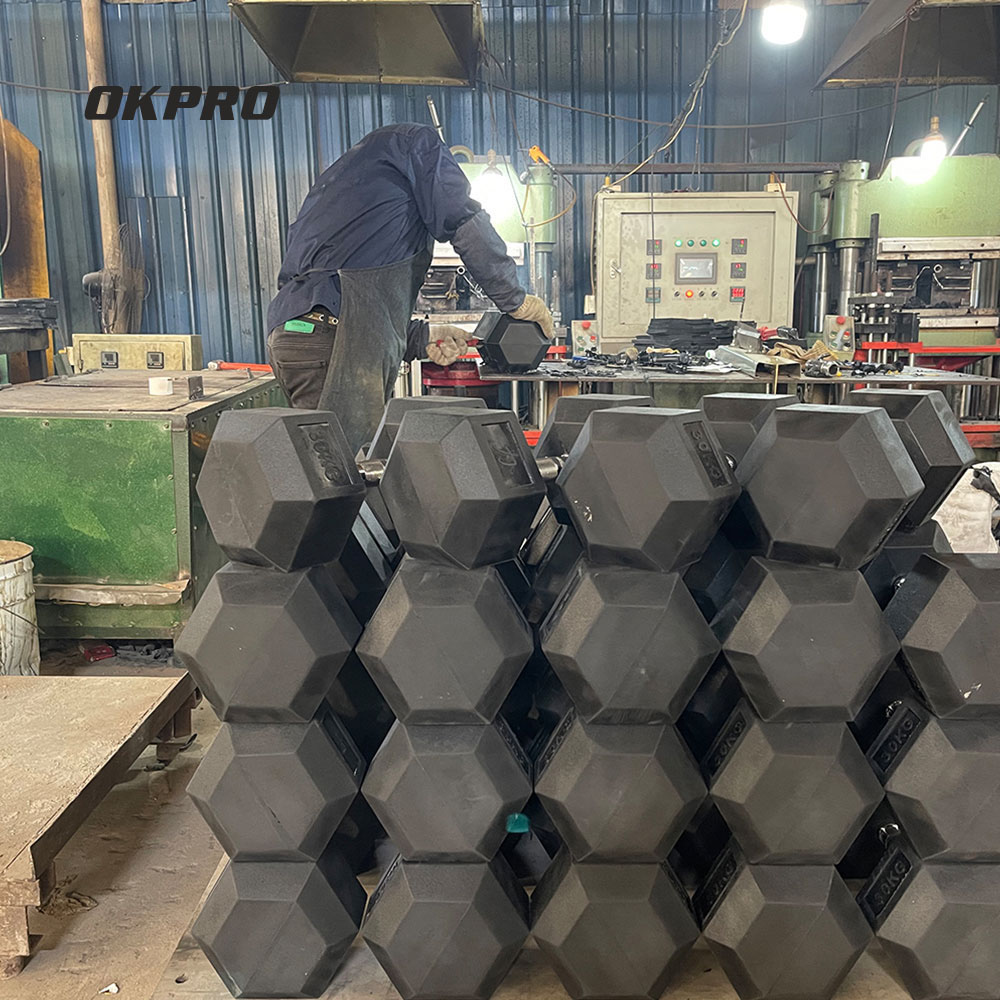
Sourcing a high-quality durable dumbbell for commercial or B2B supply chains is a decision that reaches far beyond simple price comparisons. Fitness equipment buyers, gym equipment distributors, and private-label brands increasingly demand products built to withstand years of heavy commercial use, aggressive handling, and consistent exposure to sweat, floor impact, and cleaning chemicals. Understanding how a durable dumbbell is manufactured — and what separates a reliable supplier from an unreliable one — is the foundation of any successful B2B sourcing strategy in this competitive market.

This guide is designed specifically for procurement managers, fitness equipment wholesalers, gym chain operators, and brand owners who are actively evaluating manufacturing partners for durable dumbbell products. We will walk through the critical elements of dumbbell construction, the manufacturing quality standards that matter most, how to evaluate and vet suppliers, and the commercial considerations that protect your margins and brand reputation. Whether you are placing your first large order or optimizing an existing supply chain, the insights in this guide will help you make more informed, confident sourcing decisions.
Understanding What Makes a Dumbbell Truly Durable
Material Selection and Core Construction
The durability of any durable dumbbell begins with the materials used in its core construction. Cast iron remains the most widely used base material for commercial-grade dumbbells because of its density, dimensional stability, and resistance to deformation under repeated loading. However, the quality of cast iron can vary significantly between foundries, with inferior grades introducing micro-porosity, surface defects, and inconsistent weight tolerances that compromise long-term reliability.
Rubber coating is another defining factor in manufacturing a genuinely durable dumbbell for commercial environments. High-grade virgin rubber or high-density recycled rubber encasements protect both the dumbbell and the floor, reduce noise on impact, and provide resistance against chemical exposure from cleaning agents. The bonding process between the rubber shell and the iron core must be chemically and mechanically robust — a poorly bonded coating will peel, crack, or separate under the friction and impact stresses of daily gym use, significantly reducing product lifespan.
Hex-shaped rubber-coated dumbbells represent one of the most popular durable dumbbell configurations for commercial buyers. The hex geometry prevents rolling, protects the floor surface, and provides ergonomic advantages during push-up and renegade row exercises. Suppliers who specialize in this design, such as those offering products like the durable dumbbell in hex rubber-coated formats, typically invest more heavily in precision molding tooling and vulcanization processes that define long-term product quality.
Handle Design and Ergonomic Integrity
The handle is one of the most structurally stressed components of any durable dumbbell, yet it is frequently underestimated in sourcing conversations. Commercial gym environments place handles under continuous rotational, compressive, and tensile stress. Handles manufactured from solid steel or robust cast iron with properly machined knurling patterns provide both mechanical strength and user safety. Handles with inconsistent knurling depth or poorly finished edges cause skin abrasion and reduce the user's grip confidence, leading to complaints and returns.
Chrome-plated handles on a durable dumbbell are common in mid-to-premium product lines. The chrome layer must meet a minimum thickness specification — typically between 15 and 25 microns for commercial applications — to resist corrosion and surface wear. Buyers sourcing in volume should request plating thickness certifications as part of quality documentation, since under-specification chrome plating is a frequent cost-cutting measure among lower-tier manufacturers that directly affects product longevity and appearance over time.
Key Manufacturing Standards and Quality Benchmarks
Weight Tolerance and Accuracy Verification
For any durable dumbbell intended for commercial or professional use, weight accuracy is a non-negotiable quality requirement. Industry best practice specifies a tolerance of plus or minus two percent of the stated weight. This may seem like a minor concern, but in a commercial gym environment where dozens of pairs are used simultaneously, inconsistent weighting creates user confusion, undermines brand trust, and can even contribute to asymmetrical training injuries over time.
B2B buyers should require manufacturers to provide documented weight verification reports from calibrated scales, ideally on a batch-by-batch basis. A reputable manufacturer of a durable dumbbell will have integrated quality control checkpoints on the production line where every unit — or at minimum a statistically significant sample — is weighed and logged. This documentation is also valuable for downstream compliance if you are supplying equipment to regulated fitness facilities or government procurement programs.
Surface Finish Testing and Chemical Resistance
The surface coating of a durable dumbbell must withstand repeated exposure to industrial cleaning agents, body sweat, and UV light in both indoor and outdoor fitness environments. Reputable manufacturers conduct standardized immersion and abrasion tests on rubber coatings to validate resistance to common disinfectant chemicals used in commercial cleaning protocols. Buyers who neglect to verify this often receive complaints about coating discoloration, surface tackiness, or rubber degradation within the first year of commercial deployment.
Shore hardness testing is another key benchmark for evaluating rubber quality on a durable dumbbell. Commercial-grade rubber coatings typically fall within the Shore A 60 to 80 range, providing a balance between impact absorption and structural firmness. Softer rubber below this range tends to deform under storage pressure in multi-tier rack systems, while harder rubber reduces the protective floor and noise benefits that make rubber-coated dumbbells preferable to bare iron models in commercial environments.
Supplier Evaluation and Factory Auditing for Dumbbell Sourcing
Production Capability and Capacity Assessment
When qualifying a manufacturing partner for a durable dumbbell line, production capability extends far beyond a single product demonstration. B2B buyers need to understand whether the factory has integrated foundry and rubber molding capabilities on-site or relies on outsourced subcomponent supply chains. Integrated manufacturing typically results in tighter quality control and more predictable lead times, both of which are critical when managing commercial replenishment cycles or private-label launch timelines.
Capacity verification is equally important. A manufacturer able to produce a high-quality durable dumbbell in sample quantities may struggle to maintain the same quality standard at scale. Before committing to volume orders, request production capacity certificates, monthly output data, and references from existing B2B clients with comparable order volumes. Visiting the production facility — either in person or through a professional third-party audit service — remains the most reliable way to assess whether stated capabilities match actual operational reality.
Certifications and Compliance Documentation
The international fitness equipment market requires compliance with a growing set of safety and quality certifications. For a durable dumbbell destined for the European market, compliance with EN ISO standards for fitness equipment — particularly EN 20957 — is essential for commercial sales and institutional procurement. Buyers targeting North American markets should evaluate ASTM compliance as well as California Proposition 65 compliance for rubber and paint materials, which governs the presence of hazardous substances in consumer products.
Responsible durable dumbbell manufacturers will proactively provide certification documentation as part of their B2B sourcing package. Certifications should be current, issued by accredited third-party testing laboratories, and specific to the product models being sourced rather than generic company-level documents. Buyers should also confirm that any private-label or custom product runs will undergo separate testing rather than relying on certifications obtained for a different product configuration.
Commercial and Logistical Considerations in Dumbbell Procurement
MOQ, Pricing Structure, and Lead Time Management
Minimum order quantities for a durable dumbbell program vary significantly between manufacturers based on their production model, tooling investment requirements, and market positioning. Foundry-integrated manufacturers typically set MOQs in the range of 500 to 2,000 pairs per weight increment for standard product lines, while custom configurations with proprietary rubber formulations or unique handle designs may require higher commitments. Understanding these commercial thresholds upfront prevents misalignment between your sourcing budget and manufacturer expectations.
Pricing for a durable dumbbell in B2B contexts is driven by raw material costs — primarily iron and rubber — alongside labor, finishing processes, and logistics. Iron and rubber commodity prices are cyclical, so experienced B2B buyers negotiate price adjustment clauses tied to published commodity indices rather than accepting fixed-price commitments that may expose either party to unsustainable margin pressure during raw material volatility. Locking in tooling costs and amortization schedules separately from per-unit pricing also provides greater transparency in long-term supplier relationships.
Packaging, Labeling, and Private-Label Flexibility
Packaging is frequently overlooked in early-stage dumbbell sourcing discussions, yet it directly affects product integrity on arrival and retailer shelf appeal. A durable dumbbell sourced for retail distribution requires packaging that protects against shipping damage, communicates brand identity, and meets retailer compliance requirements for labeling and barcode standards. Manufacturers with in-house graphic design and packaging production capabilities offer significantly greater flexibility for private-label buyers than those relying entirely on generic carton formats.
For B2B buyers developing proprietary fitness equipment brands, private-label flexibility in durable dumbbell manufacturing encompasses color customization of rubber coatings, custom handle engravings or paint finishes, and branded packaging design. Confirming the depth of a manufacturer's customization capability — and the associated tooling costs and timelines — during supplier qualification prevents costly surprises later in the product development process. Always request a physical sample of any custom configuration before approving production at scale.
Building a Long-Term Supply Partnership for Dumbbell Products
Communication Standards and Responsiveness
A reliable manufacturing partner for a durable dumbbell product line is one that treats communication as a core business function rather than a reactive service. Buyers should assess responsiveness during the inquiry and sampling phase as a predictor of how issues will be handled during production runs or post-shipment disputes. Manufacturers who assign dedicated account managers to B2B clients, provide proactive production progress updates, and respond to quality queries within 24 business hours are far more likely to protect your brand integrity over the long term.
Language capability and time zone overlap are practical considerations when managing a durable dumbbell supply chain across international borders. Beyond basic English proficiency, the most effective manufacturing partners can provide technically accurate documentation — including material specifications, test reports, and production schedules — without requiring significant translation or clarification effort. This reduces sourcing risk and accelerates the decision cycle when managing time-sensitive commercial opportunities.
Quality Assurance Agreements and Dispute Resolution
Formalizing quality expectations in a binding supplier quality agreement is a best practice that separates sophisticated B2B buyers from transactional ones. A well-structured agreement for a durable dumbbell procurement program should define acceptable defect rates by category — cosmetic defects, dimensional non-conformance, weight tolerance failures — along with the process for inspection, rejection, and remediation. Specifying whether pre-shipment third-party inspections are mandatory, and who bears that cost, prevents ambiguity when quality disputes arise.
Dispute resolution clauses in durable dumbbell supply agreements should specify arbitration jurisdiction, documentation requirements for claims, and timelines for resolution. While most reputable manufacturers work collaboratively to resolve quality issues, having contractual clarity reduces the leverage that a non-performing supplier might otherwise exploit. Buyers who treat supplier agreements as living documents — reviewing and updating them as the relationship matures — build supply chains that are both more resilient and more commercially productive over time.
FAQ
What weight range should I source in a commercial durable dumbbell program?
Most commercial gym programs require a complete durable dumbbell set ranging from 5 lbs to at least 100 lbs, typically in 5 lb increments. The exact range depends on your target facility type — corporate wellness centers may top out at 50 lbs, while performance training gyms often require sets extending to 120 lbs or beyond. Confirm your end-user requirements before finalizing your procurement scope with any manufacturer.
How do I verify that a manufacturer's durable dumbbell rubber coating meets commercial standards?
Request third-party test reports covering Shore A hardness, tensile strength, chemical resistance to common gym disinfectants, and abrasion resistance. A credible manufacturer of a durable dumbbell product will have these documents available from accredited testing laboratories and will be transparent about the rubber grade and vulcanization process used in production. Pre-shipment physical inspection of rubber bonding integrity is also advisable for large volume orders.
What is the typical lead time for a custom durable dumbbell order?
Standard durable dumbbell configurations with existing tooling typically have production lead times of 30 to 60 days after order confirmation and deposit receipt. Custom configurations requiring new rubber molds, unique handle designs, or proprietary color formulations can extend lead times to 75 to 120 days. Always build buffer time into your procurement planning to account for quality inspection, export documentation, and international freight transit.
Is it better to source a durable dumbbell from a manufacturer with integrated foundry and rubber capabilities?
Yes, in most cases integrated manufacturing capabilities provide significant advantages in quality consistency and supply chain control for a durable dumbbell program. When the iron casting, rubber coating, and final assembly occur under one roof with a unified quality management system, defect rates tend to be lower, accountability is clearer, and production flexibility for custom requirements is greater. Multi-supplier assembly models can work but require more rigorous incoming material inspection and inter-supplier coordination on your part.
Table of Contents
- Understanding What Makes a Dumbbell Truly Durable
- Key Manufacturing Standards and Quality Benchmarks
- Supplier Evaluation and Factory Auditing for Dumbbell Sourcing
- Commercial and Logistical Considerations in Dumbbell Procurement
- Building a Long-Term Supply Partnership for Dumbbell Products
-
FAQ
- What weight range should I source in a commercial durable dumbbell program?
- How do I verify that a manufacturer's durable dumbbell rubber coating meets commercial standards?
- What is the typical lead time for a custom durable dumbbell order?
- Is it better to source a durable dumbbell from a manufacturer with integrated foundry and rubber capabilities?