 EN
EN

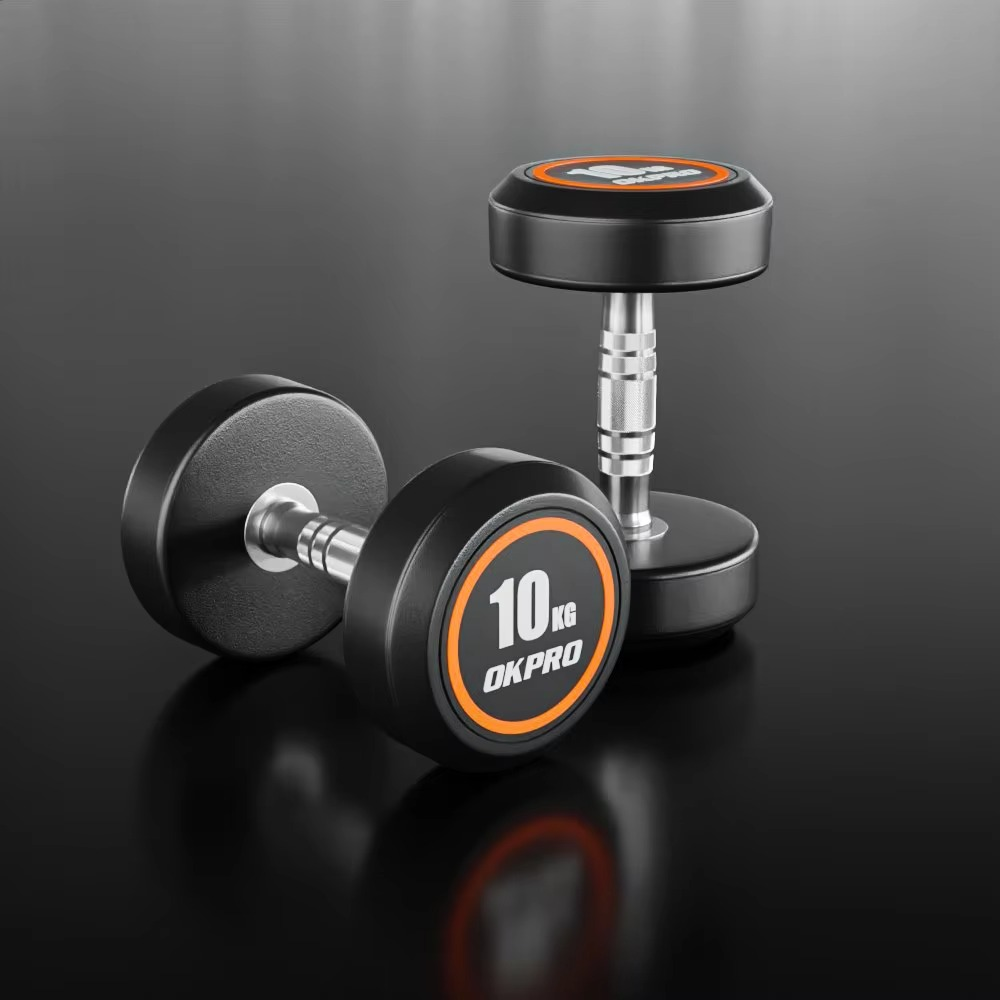
In commercial gyms, institutional fitness centers, and professional training facilities, equipment endures a relentless cycle of use that consumer-grade products simply cannot sustain. The rubber dumbbell has become the cornerstone of high-usage strength training environments precisely because it is engineered to withstand this level of demand. Unlike cast iron or chrome alternatives, the rubber dumbbell offers a combination of structural resilience, floor protection, and user safety that facility operators and procurement managers have come to rely on across industries ranging from hospitality to military conditioning.

Understanding how factory engineering shapes the performance and longevity of a rubber dumbbell is essential for anyone responsible for specifying fitness equipment at scale. This article explores the manufacturing principles, material science decisions, structural design logic, and quality assurance protocols that define what separates a truly industrial-grade rubber dumbbell from a product that merely looks the part. Whether you are outfitting a large commercial facility or sourcing for a long-term institutional contract, the engineering behind your equipment investment matters significantly.
The Engineering Foundation of an Industrial-Grade Rubber Dumbbell
Material Selection and Compound Formulation
The outer encasement of a high-performance rubber dumbbell is not simply natural rubber. Factory engineers working in industrial production environments formulate vulcanized rubber compounds that are specifically calibrated for impact absorption, chemical resistance, and long-term elasticity retention. The vulcanization process cross-links polymer chains within the rubber, dramatically increasing the material's tensile strength and resistance to cracking under repeated mechanical stress.
In high-usage facilities, dumbbells are dropped, stacked, rolled across floors, and handled by dozens of users daily. A properly formulated rubber dumbbell compound must maintain its integrity through thousands of impact cycles without developing surface fissures, delamination, or permanent deformation. Factory engineers balance hardness ratings, rebound resilience, and Shore A durometer values to achieve this outcome for specific weight classes and use contexts.
Recycled rubber content is also a consideration in industrial-grade production. Many factories incorporate controlled percentages of recycled granulate alongside virgin rubber to achieve cost efficiency without compromising structural performance. The ratio between virgin and recycled content, as well as the particle size of the granulate, directly affects the surface texture, density uniformity, and odor profile of the finished rubber dumbbell.
Core Loading and Weight Accuracy
The internal structure of an industrial-grade rubber dumbbell typically consists of a cast iron or steel core that provides the primary mass. This core must be precisely weighted and centered within the mold before the rubber encasement is applied. Factories that serve professional and institutional markets invest in calibration systems that ensure each rubber dumbbell falls within tight tolerance bands — often within one to two percent of its labeled weight across entire production runs.
Weight inaccuracy is not merely a technical inconvenience. In professional strength training environments, users rely on consistent resistance for progressive overload programming. A poorly calibrated rubber dumbbell set introduces variability that undermines training outcomes and erodes user trust in facility equipment. Factories committed to industrial-grade production treat weight accuracy as a primary quality indicator, not an afterthought.
Structural Design Logic for High-Frequency Use
Hex Head Geometry and Stability Engineering
The hexagonal head shape found on most commercial-grade rubber dumbbell products is not an arbitrary aesthetic choice. It is a deliberate engineering decision that serves multiple functional purposes in high-usage environments. The flat faces of the hex head prevent the dumbbell from rolling across floors when set down, reducing both safety hazards and equipment damage from uncontrolled movement across hard surfaces.
In storage rack systems, hexagonal geometry allows for tighter, more stable stacking configurations compared to round-head designs. This matters considerably in large facilities where dozens of pairs must be stored, retrieved, and returned efficiently throughout the day. The structural geometry of the rubber dumbbell head also distributes impact forces more evenly when the unit is dropped, protecting both the equipment and the flooring beneath it.
Industrial factories producing hex-head rubber dumbbell products engineer the corner radii and face angles carefully. Too sharp a corner increases the risk of rubber chipping at impact points. Too rounded a geometry reduces the anti-roll effectiveness. The optimal design balances these competing demands through iterative prototype testing under simulated high-usage conditions before committing to full production tooling.
Handle Construction and Ergonomic Engineering
The handle of a rubber dumbbell is the primary interface between user and equipment, and its engineering demands are distinct from those of the head encasement. Industrial handles are typically constructed from solid steel with a knurled surface texture that provides grip security during heavy lifts, high-repetition sets, and sweaty training conditions. The knurling pattern — its depth, pitch, and coverage area — is specified by factory engineers to balance grip security against palm comfort during extended use.
Handle diameter is another critical variable. Professional-grade rubber dumbbell manufacturers offer standardized handle diameters that conform to widely accepted ergonomic parameters for different weight classes. Heavier dumbbells typically feature slightly larger diameter handles to accommodate the mechanical advantage required for safe lifting, while lighter units prioritize comfortable grip for higher-repetition movement patterns.
The connection between handle and rubber head is a structural vulnerability point that industrial-grade engineering addresses through deep insertion depth and robust bonding processes. Some factories use a combination of mechanical interlocking and chemical adhesion to ensure that the rubber head cannot detach from the handle under the forces generated in heavy compound movements. This bonding integrity is tested during quality assurance under load conditions that simulate years of professional use.
Manufacturing Processes That Define Industrial Quality
Compression Molding and Vulcanization Control
The production of a high-performance rubber dumbbell relies heavily on compression molding — a manufacturing process in which raw rubber compound is placed into a precision-machined mold and subjected to controlled heat and pressure. The vulcanization reaction that transforms the compound into its final form is time-temperature dependent, and industrial factories invest in monitoring systems that ensure consistent curing conditions across every production batch.
Inconsistent vulcanization produces rubber with uneven cross-link density, which manifests as soft spots, surface irregularities, or premature cracking in service. For a rubber dumbbell used in commercial environments, these defects become apparent quickly under the load of daily high-frequency use. Industrial factories run regular destructive testing on sample units pulled from production batches to verify that vulcanization parameters are producing the intended material properties throughout the full thickness of the encasement.
Surface Finishing and Quality Control Protocols
After molding, industrial-grade rubber dumbbell units undergo a series of finishing and inspection steps. Flash removal — the trimming of excess rubber that escapes the mold parting line — must be performed cleanly and consistently to ensure a professional appearance and eliminate sharp edges that could cause user discomfort or surface damage to storage racks. Automated deflashing equipment is used at scale to maintain consistency across high-volume runs.
Visual and dimensional inspection protocols identify units with surface voids, bonding failures, color inconsistencies, or out-of-tolerance geometry before they reach distribution. Factories supplying institutional and commercial clients typically maintain documented quality records for each production lot, enabling traceability in the event of field performance issues. The rubber dumbbell that arrives at a professional facility should carry the backing of these rigorous production controls, not simply a visual resemblance to a quality product.
Color coding by weight is a standard feature in commercial rubber dumbbell sets, and its implementation requires factory-level consistency in pigment formulation and application. Users in busy commercial gyms rely on color differentiation to quickly identify the correct weight without reading labels. Factories achieve reliable color accuracy through standardized pigment concentrations and batch-to-batch color matching protocols that maintain consistency across large procurement orders.
Performance Expectations in High-Usage Institutional Environments
Longevity Benchmarks and Lifecycle Cost Analysis
A properly manufactured industrial-grade rubber dumbbell is designed to deliver years of reliable service under commercial use conditions without requiring replacement. Facility operators and procurement professionals evaluating equipment investments should think in terms of total cost of ownership rather than unit acquisition cost alone. A rubber dumbbell set that costs more upfront but lasts five to seven years in a commercial environment delivers far better value than a cheaper product that requires replacement every eighteen months.
Longevity is determined by a combination of rubber compound quality, core construction, bonding integrity, and handle finish durability. Facilities with aggressive usage patterns — including group fitness classes, personal training studios, and high-traffic hotel gyms — should specifically inquire about the production specifications used by their supplier rather than relying solely on marketing claims. The engineering data behind a rubber dumbbell is the most reliable predictor of its field performance.
Environmental and Operational Considerations
High-usage environments introduce variables that affect rubber dumbbell longevity beyond simple mechanical stress. Elevated ambient temperatures, exposure to cleaning chemicals, UV exposure in outdoor or semi-outdoor fitness areas, and humidity from pool-adjacent facilities all place additional demands on the rubber compound. Industrial-grade manufacturers formulate their compounds with these environmental factors in mind, selecting antioxidant packages and stabilizers appropriate for the intended use context.
Cleaning agent compatibility is a particularly important consideration in institutional settings where infection control protocols mandate regular disinfection of all shared surfaces. Certain aggressive disinfectant formulations can accelerate rubber surface degradation, causing premature hardening, cracking, or surface tack loss. Procurement specifications for institutional rubber dumbbell purchases should include confirmation of compatibility with the facility's standard cleaning products, which responsible factories can verify through material testing data.
Storage system compatibility also affects the long-term condition of a rubber dumbbell fleet. Racks that apply sustained localized pressure to the rubber heads can cause permanent deformation over time, especially in warmer environments. Industrial factory engineers design head geometry with standard rack configurations in mind, but facility operators should verify that their storage solution is appropriate for the specific product they are procuring.
FAQ
What distinguishes an industrial-grade rubber dumbbell from a standard commercial product?
An industrial-grade rubber dumbbell is differentiated by its material formulation, weight accuracy tolerances, bonding process quality, and the documented quality control protocols used during production. Standard commercial products may share a similar appearance but lack the compound specification, vulcanization control, and inspection rigor needed to sustain performance across years of high-frequency institutional use. The engineering behind the product — not just its surface appearance — is what determines long-term reliability.
How does the rubber compound used in a rubber dumbbell affect its lifespan in a commercial gym?
The rubber compound determines how well the rubber dumbbell resists impact cracking, surface degradation from cleaning chemicals, and hardening due to oxidation over time. A properly formulated vulcanized compound with appropriate antioxidant stabilizers will retain its physical properties through years of daily use, while a lower-specification compound will show visible surface deterioration within months in a demanding environment. Compound quality is the most significant variable in predicting commercial-use lifespan.
What weight accuracy standard should be expected from a factory-grade rubber dumbbell?
Industrial and professional-grade rubber dumbbell production targets weight accuracy within one to two percent of the labeled weight across entire production batches. This standard ensures that users experience consistent resistance throughout a matched set and across replacement units purchased at different times. Facilities procuring at scale should request tolerance documentation from their supplier and verify that quality assurance sampling is performed at the factory level before shipment.
Are rubber dumbbells suitable for outdoor or semi-outdoor fitness installations?
A rubber dumbbell engineered with UV stabilizers and appropriate antioxidant packages can perform adequately in semi-outdoor environments such as covered terraces, pool decks, and open-air hotel fitness areas. However, prolonged direct UV exposure and standing moisture significantly accelerate rubber degradation even in quality products. Procurement specifications for outdoor installations should explicitly confirm environmental suitability with the factory, and additional protective storage solutions should be considered to maximize equipment lifespan.
Table of Contents
- The Engineering Foundation of an Industrial-Grade Rubber Dumbbell
- Structural Design Logic for High-Frequency Use
- Manufacturing Processes That Define Industrial Quality
- Performance Expectations in High-Usage Institutional Environments
-
FAQ
- What distinguishes an industrial-grade rubber dumbbell from a standard commercial product?
- How does the rubber compound used in a rubber dumbbell affect its lifespan in a commercial gym?
- What weight accuracy standard should be expected from a factory-grade rubber dumbbell?
- Are rubber dumbbells suitable for outdoor or semi-outdoor fitness installations?