
 EN
EN
Understanding Weightlifting Bar Basics for Effective Routines
Types of Weightlifting Bars and Their Uses
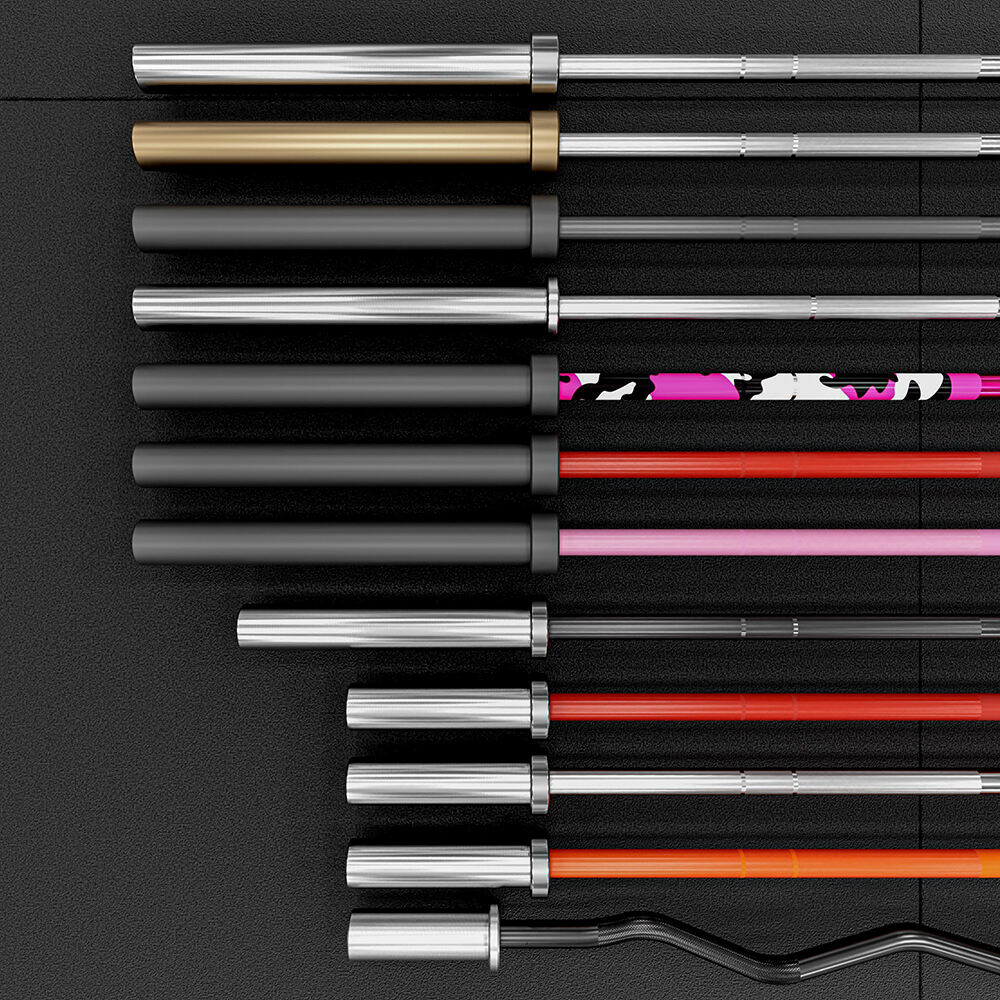
The lifting bars Weightlifting has several different kinds of bars, all of which are used to help increase one’s ability to perform and develop good technique. The Olympic barbell, appreciated by all lifters, offers superior strength training such as snatches and clean and jerks. Beginners and general strength trainingThe average barbell will cater to the beginner or any general fitness use. Specialty bars like hex bars or curl bars offer alternate grips and muscle targeting to help you mix up your workouts. When selecting a barbell, take into account the weight, length and diameter, as well as the weight capacity for ensured you can train effectively.
Barbell Set Components: Plates, Collars, and Maintenance
There are a few essential components to any barbell set, including your weight plates, collars, and the bar. Barbell plates come in all shapes and sizes but the two that are most commonly used in gyms are iron and bumper plates, they are also available in different resistance levels depending on what your strength goal is. Collars are designed to help secure plates on to the bar by providing a tighter grip, which helps to prevent plates from moving during a WOD or during lifts. Maintain these elements to extend your equipment's life and safety – fitness pros recommend checking the wear and tear and cleaning of this equipment. Weight plates can last up to 10 years, such components typically last, according to industry statistics and bars should be inspected more frequently for signs of damage or bending.
How Barbell Weight Impacts Routine Design
The resistance generated by the barbell in weightlifting is essential for the effectiveness of the weightlifting regime. The two larger weights determine the volume and frequency of training and indicate what weights can be chosen. Strategic weight increments are in place to provide the optimum level of stimulation so your gains won’t hit a wall. According to experts, It's safe and effective to do that as long as you balance your weight choices; select a weight you can do about 10 reps with for one set and progress from there. One word of caution, you may feel some soreness after the first few workouts, but that's normal. And if one knows barbell weight collocation effects, he or she can make routine which corresponds to the requirement and ability.

Structuring Custom Weightlifting Routines
Balancing Split Routines vs. Full-Body Workouts
When scheduling weightlifting, knowing the good and bad about full-body workouts and split routines will come in handy. Splits Split routines cater to certain muscle groups on each day, with potential for targeted and extensive recovery. That can be an advantage for intermediate lifters who are looking to focus muscle building and strength but can also sometimes mean a big time commitment per week of exercise. On the flip side, doing full body one day workout hits several muscle groups at once – great for productivity and health! These workouts can also help you get back in shape faster and are good for people who are new to exercise, or who don’t have time to spend hours at the gym. There are also physiological variations in the way in which the muscle recovers and grows, which could affect the type of routine that’s right for you. Research shows both can help you get stronger and recover from muscle damage — you should decide which method best suits your personal fitness goals and schedule.
Exercise Order and Volume for Barbell Training
Order and magnitude of exercises are key factors in barbell training aiming at maximum strength. Start your workouts with compound exercises such as squats or dead-lifts because you’ll use more energy and work more muscle. Finish with isolation exercises like bicep curls to develop individual muscles after fatigue. As a rule-of-thumb, if your goal is to build strength, you’re going to want to perform low reps and use heavy weight, not high reps with light weight for muscular endurance. For instance, 4-6 rep ranges are conducive to strength, while 12-15 rep ranges are more likely to improve muscular endurance. Professional trainers suggest you can train according to your own progress in this aspect, being more consistent with physical condition and avoiding the plateau. Feedback about itself can direct these refinements, leading to more personal growth.
Incorporating Dumbbell Sets for Accessory Work
Mixing in dumbbell sets with a barbell routine is a big step towards enhancing general strength, especially with accessory work. Dumbbells enable more range of motion and can focus on stabilizing muscles that a barbell exercise might ignore. Some also use accessory movements – Dumbbell lunges and flyes, which balance and synchronize the primary barbell lifts. The numbers don't lie, varying your equipment leads to better results, providing more balanced development and minimizing risk of injury. It is a must to include accessory work as part of your program to increase strength, reduce muscle imbalances, and improve flexibility. Add some dumbbell workouts to your routine as you get stronger.
Exercise Selection for Barbell-Centric Programs
Compound Lifts: Squats, Deadlifts, and Presses
Squats, deadlifts, and presses are compound lifts, which are crucial for gaining mass and strength, as they activate many muscle groups at once. They build the foundation of every single good weightlifting workout, and they are absolutely necessary for balanced muscle development. Performing these lifts properly requires knowledge on how to maintain form and prevent injury, though. (Note for example that squats should be hinged through the hips, not rounding the back and that with deadlifts precise grip and stance alignment are required. Furthermore, statistically speaking, compound movements adherence allows for obvious incredible improvement. According to research appearing in the Journal of Strength and Conditioning Research, subjects that used these exercises in their training programs were able to see a 33% increase in muscle mass in just 12-weeks!
Isolation Movements with Weight Plates
Isolation exercises are important for focussing on individual muscles, working through weak spots and achieving muscle balance. Working these in with compound exercises as part of a barbell routine can maximize results. Weight plates are designed for use in all areas of fitness and are ideal for full body workouts.ppy Our weight plates are extremely durable and are built to stand the test of time, giving you confidence in their quality. Some executing tips are to keep the movement under control and do not rely on momentum to keep appropriate tension for the muscle worked. Studies, including (but not limited to) those mentioned in The American Journal of Sports Medicine, demonstrate that using isolation exercises actually decreases the risk of injury and stimulates muscle growth -- particularly when you're doing compound lifts in addition.
Customizing Olympic Lifting Variations
Olympic lifting alternatives provide a high degree of complexity and sport specificity, which is why they’re interesting for intermediates looking to improve explosiveness and everyday strength. Adapting these movements to a personal lifting program requires understanding the idiosyncratic mechanics of performing exercises such as the clean and jerk or snatch. You do have to tailor the lifts to your goals including the weight, the reps and the intensity. Professional techniques recommend a systematic approach to progress towards enhanced skills with the requirement of safety. When introduced as part of a program performed in professional sports, this complex lifting pattern can give significant benefits without endangering the safety, as indicated in the performance data of professional athletes or training programs.
Tracking Progress in Custom Weightlifting Routines
Using Strength Metrics and Volume Calculations
Recording in custom weightlifting programs can be difficult due to the knowledge of strength metrics and volume calculations associated with the training process. By keeping track of these numbers over time we can measure our fitness gains. Training volume, which is simply weight lifted multiplied by number repetitions and repetitions set, is important to consider when you want to maximize a workout. This method keep us on top of our habits and be able to make educated changes to our habits and keep growing and not being stuck. Tracking apps, like FitNotes and Strong, can provide you with accurate logging features, allowing you to easily see and track your weightlifting improvement.
Adjusting Barbell Weight Increments Strategically
Levers Adapt the Barbell Pressing Strength Curve With weightlifting routines, there must be some strategic adjustment of barbell weight in order to keep the strength gains coming. Understanding when to more gradually progress load in response to performance indicators, such as rated perception of effort and recovery, is valuable. The logic of this approach, which is a staple of strength training science, is that progressively overloading the muscles increases the load on them, making them grow. If you want to be successful, train for 100% of your lifts and track your performance." Experts recommend keeping a close eye on your performance to avoid plateaus, and finding the right balance between lifting intensity and recovery. Utilising recommended approaches from apps, such as Stacked, can also assist in this process, instructing where and when to make weight changes effectively.
Periodization Techniques for Long-Term Growth
One might say that long-term hypertrophy and strength progress depends on the applicated the periodisation methods. This organized method, which combines higher and lower intensity and volume training through specific cycles, aids in growth maximization. Various periodization models (e.g., linear or undulating) can be modified to be included within an individualized lifting program. These strategies provide the user with the freedom to modify their workout plans according to their current progress and performance goals, so they can always make progress. Evidence-based anecdotes showcase the power of periodized training programs, bringing about awesome gains in strength and mass. For the users who are incorporating periodization into their workouts, using data from apps such as Fitbod to inform planning and inevitable execution can help the individual achieve better results.
Avoiding Common Barbell Routine Mistakes
Overtraining with Heavy Weights
One of the most regular oversights for weight lifting routines is the overtraining with heavy weights. Recognizing the symptoms of over-training is essential to maximize performance and the is key recovery. These are tiredness, reduced performance, grumpiness, and muscles that take too long to recover. An appropriate ratio of intensity to rest is being key of avoiding overtraining. My suggestion is to have a week ready with varying intensity and programmed rest days. Statistics also show proper rest allows athletes to recover approximately 12 to 15% faster and yield fewer performance decreases. Recovery has to come first in order for muscles to repair and get stronger without burning out.
Neglecting Grip Strength and Mobility
Grip strength and mobility is often overlooked but can have a big effect on weight lifting performance. The grip is necessary to control the weight in your hands during a lift and better mobility means a longer range of motion, which in turn means less chance of injury. To improve grip and movement, you may want to add drills such as farmer’s walks, wrist curls and dynamic stretching to your montages. Studies have also indicated a strong relationship between grip strength and lifting overall (which we discuss further below). Another study was mentioned in the journal of Strength and Conditioning showed that people who regularly train their grip strength will also improve their lifting performance by up to 20%.
Plateau Prevention Strategies
Weight Lifting Plateaus can be a Drag Weight lifting plateaus are as any weight lifter knows, very frustrating - sometimes even more so for the beginner when (for instances) a single pound or 2 pounds does not get added to the bar. So the plateaus are usually araised by the same exercises, the lack of evolution, or the lack of variety. To avoid that I recommend changing exercises, rep ranges and increasing load for cycles. According to those in the know, staying motivated and stopping your workouts from becoming stagnant involves some creativity in your gym sessions. Providing that you work with different exercises, constant variety during workouts is good and promotes muscle adaptation. Also, when you have clear, intermediate goals allows you to maintain focus and drive to stay consistent for long-term lifting success. Simple Ways to Avoid This Mistakes in Your Barbell Program By not making these fatal barbell program mistakes, you will maximize your lifts, lift safely, and make long lasting strength progress. If you focus on your grip strength, you can build your lifting and stop from plateauing completely.
Advanced Customization Techniques
Implementing Dynamic Weight Modes (e.g., Chains, Eccentrics)
Dynamic weight modes can go a long way in improving 1programming_ Full weight Programs. These methods, such as chains and eccentrics, are used to develop strength and power by manipulation of the resistance during the lift. A chain provides a linear or progressive increment in resistance as the lift is performed, making the exercise more difficult in the completion of the movement. Eccentric training targets the lengthening phase of lifts, and some studies have found that it can lead to greater strength gains. Data from high-performance training squads show that, when using these techniques, athletes report enhanced performance, with increased power and strength observed in competition.
Creating Sport-Specific Barbell Programs
Complementing barbell programming based on sport is critical to sport-specific goals. For example, football players could use more dynamic squatting and deadlifting varieties that replicate sport movements, whereas weightlifters could utilize highly technical, competition-style lifts that will help improve performance on the platform. Coaches have long recognized the importance of specificity in training to achieve peak performance, insisting that one size fits all approach is hardly ever successful in the wide world of sports. Personalizing practices helps athletes to 'get there faster' when it comes to reaching their individual goals.
Integrating Conditioning with Weightlifting Sets
Conditioning exercises that incorporate weightlifting can offer all-around fitness gains. The tactic combines cardio with strength workouts, improving both long-haul stamina and muscle strength. Things like circuit workouts and plyometrics when combined with traditional lifting can allow for some huge performance gains. According to statistics, "athletes using combined training methods have the upper hand over specialists that are focused on weightlifting alone" — better endurance and general fitness indicators. This overall preparation enables sportsperson's to develop for the wide variety of conditions and activity that make up sporting challenges.