 EN
EN

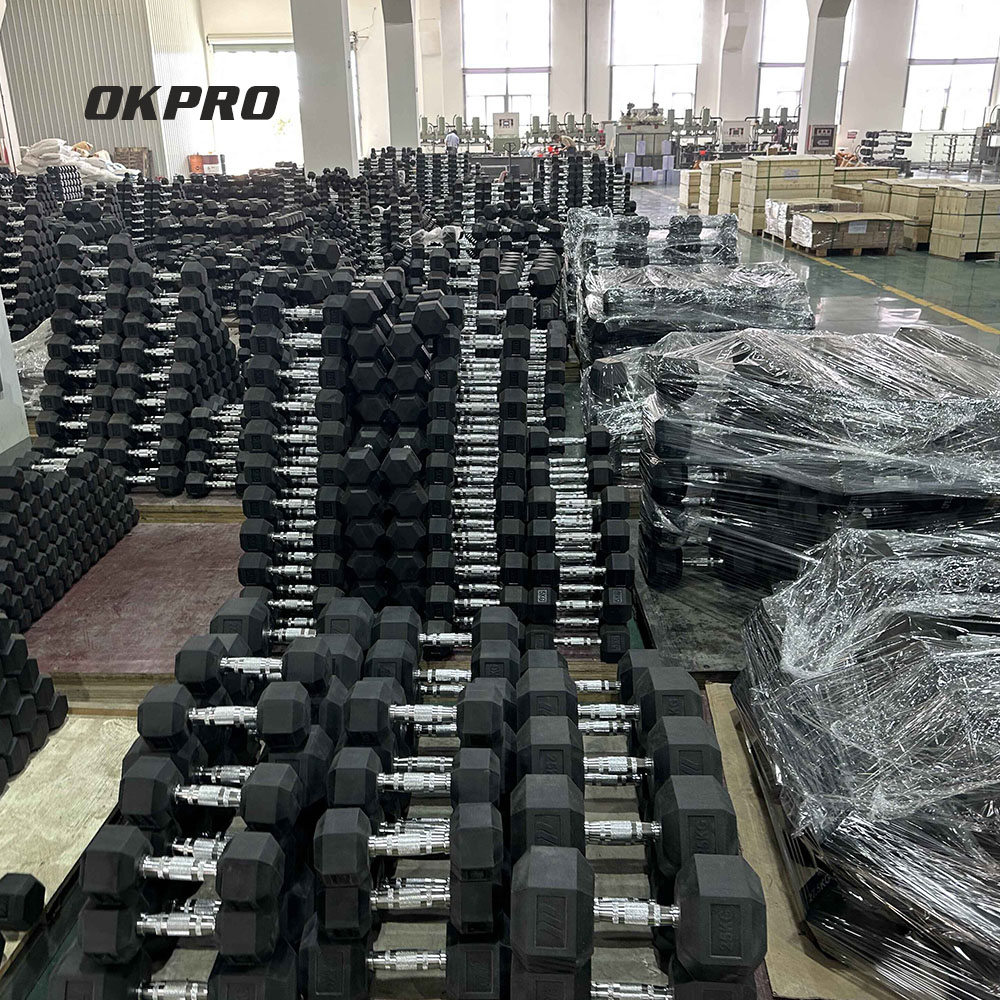
For fitness distributors looking to build a reliable, scalable product lineup, partnering with the right professional dumbbell factory is one of the most critical business decisions they will make. The fitness equipment market is increasingly competitive, and buyers at every level — from boutique gym operators to national retail chains — are demanding higher quality, more durable, and better-finished products than ever before. A manufacturer that understands these expectations and delivers consistently is not just a supplier; it is a long-term growth partner.

This article explores what defines a high-quality professional dumbbell solution from a factory perspective, what fitness distributors should look for when evaluating manufacturers, and how the right supply chain partnership can differentiate your brand in the marketplace. Whether you are sourcing for commercial gyms, hotel fitness centers, rehabilitation facilities, or direct-to-consumer retail, understanding the production capabilities and quality standards behind each professional dumbbell is essential for building customer trust and sustaining long-term margins.
What Makes a Factory Truly Professional in Dumbbell Manufacturing
Engineering Precision and Material Standards
Not every factory that produces dumbbells qualifies as a professional dumbbell manufacturer. True professionalism in this industry begins with engineering rigor — specifically, the ability to cast, machine, and finish metal components to tight tolerances that ensure accurate weight markings and balanced load distribution. A professional dumbbell must feel the same in both hands, weigh exactly what it says on the label, and maintain that consistency across thousands of production units.
Material selection is equally important. High-quality cast iron forms the core of most commercial-grade dumbbells, while the outer coating — whether rubber, urethane, or neoprene — must be bonded using industrial-grade adhesion processes. A factory that invests in vulcanized rubber coating technology, for example, produces a professional dumbbell that resists cracking, delamination, and gym floor damage far better than one using basic dip-coat methods.
Distributors should ask factories directly about their material sourcing protocols, alloy grades used in casting, and coating durability standards. These details separate truly capable manufacturers from those simply assembling imported components under a generic label.
Production Capacity and Quality Control Infrastructure
A professional factory does not just have machines — it has systems. This means documented quality control checkpoints at every stage of production, from raw material inspection through final packaging. For distributors, this matters because it reduces the rate of defective products reaching end customers, which directly protects your brand reputation.
High-output factories with dedicated QC teams can scale production without sacrificing the dimensional accuracy and surface finish quality that define a premium professional dumbbell. Look for factories that perform weight calibration testing on every unit or batch, conduct drop tests on coated surfaces, and maintain traceability records for raw materials.
Production capacity also matters for distributors managing seasonal demand spikes or expanding into new markets. A factory that can reliably produce tens of thousands of professional dumbbell sets per month — while maintaining quality — gives distributors the confidence to commit to larger purchase orders and better pricing tiers.
Key Product Features That Define Commercial-Grade Dumbbells
Rubber Coating Durability and Floor Protection
One of the most requested features in the commercial fitness sector is rubber-coated professional dumbbell construction. Gyms and training centers prioritize floor protection, noise reduction, and equipment longevity. Rubber-coated dumbbells achieve all three goals simultaneously, making them the dominant format in commercial gym procurement.
The quality of rubber matters significantly. High-density, odor-controlled vulcanized rubber provides better impact resistance and does not emit the unpleasant chemical smell often associated with lower-grade rubber products. A reputable professional dumbbell factory will use rubber compounds that meet international environmental standards, which is increasingly important for export to markets in Europe, North America, and Australia.
Distributors selling to premium gym brands or hospitality fitness centers should prioritize factories that offer anti-odor rubber formulations, because end clients in those sectors are particularly sensitive to product scent and appearance. This is a distinguishing factor that can win or lose major accounts.
Handle Ergonomics and Knurling Quality
The handle is where a user makes direct contact with a professional dumbbell, and its design has profound implications for both safety and user satisfaction. Commercial gym operators pay close attention to handle diameter, knurling depth, and chrome or matte finish options. A well-knurled handle provides secure grip during dynamic movements without causing skin abrasion during longer training sessions.
Factories producing a true professional dumbbell will offer handle diameter options typically ranging from 28mm to 38mm, accommodating different hand sizes and training styles. The knurling pattern — whether diamond, linear, or combination — should be machined consistently across the full production run, not stamped superficially in a way that wears down quickly under heavy use.
Chrome-plated handles are still preferred in many commercial environments for their durability and appearance, but matte black coatings have grown in popularity due to their modern aesthetic and resistance to visible wear. A factory that can offer both options with consistent finishing quality provides distributors more flexibility to serve diverse market segments.
How Fitness Distributors Should Evaluate Factory Partnerships
Customization Capabilities and Private Label Options
For many fitness distributors, private labeling is a key business strategy. The ability to carry a professional dumbbell line under your own brand — rather than a manufacturer's generic label — creates higher perceived value, stronger customer retention, and better margin control. A capable factory will support this through custom engraving, branded packaging, custom color options, and proprietary weight label designs.
When evaluating a factory's customization depth, distributors should inquire about minimum order quantities for custom runs, tooling costs for logo dies or molds, and lead time differences between standard and custom production. Factories with in-house design support can dramatically reduce the time from concept to first sample, which is especially valuable for distributors launching new product lines under tight deadlines.
The professional dumbbell options available today range from classic hex rubber formats to pro-style round configurations, and a flexible factory should be capable of producing either format to distributor-specified standards. Pro-style designs in particular have seen growing demand across commercial and semi-commercial gym markets due to their aesthetic appeal and perceived premium positioning.
Certification, Compliance, and Export Readiness
Distributors operating in regulated markets must verify that their factory partners meet the necessary product safety and compliance requirements. For a professional dumbbell destined for European markets, this typically includes compliance with REACH chemical regulations, particularly for rubber compounds and surface coatings. For North American markets, ASTM F1749 and related commercial fitness equipment standards may apply.
Export-ready factories will have documentation prepared for customs classification, certificates of origin, and material safety data sheets for coatings used in production. These are not bureaucratic formalities — they are real barriers to entry in quality-focused markets, and a factory that cannot provide this documentation represents a compliance risk for the distributor.
Certifications such as ISO 9001 quality management accreditation are a good baseline indicator that a factory operates with documented processes. However, distributors should also conduct their own factory audits or request third-party inspection reports to independently verify that professional dumbbell production standards match what is claimed in marketing materials.
Supply Chain Strategy for Fitness Distributors Sourcing Dumbbells
Inventory Planning and Lead Time Management
Fitness equipment has well-documented seasonal demand patterns, with peaks typically occurring in January, late spring, and pre-holiday periods. Distributors who understand these cycles and communicate them clearly to their factory partners can secure better allocation, shorter lead times, and more competitive pricing. A professional factory will work with key accounts to build a shared forecast and pre-position raw materials accordingly.
Lead time for a standard professional dumbbell order from a well-organized factory typically ranges from 30 to 60 days depending on order size, customization requirements, and current production scheduling. Distributors who treat their factory relationship as a true partnership — rather than a transactional exchange — often receive priority scheduling and access to production capacity during high-demand periods.
Maintaining a safety stock of core SKUs is another strategy that reduces the risk of stockouts during demand spikes. Many distributors work with their factory to hold a portion of production on consignment or in bonded warehouse arrangements, particularly for high-velocity professional dumbbell weights such as the mid-range 15 to 50 lb sets commonly used in commercial gym flooring packages.
Freight, Packaging, and Product Protection During Shipping
Dumbbells are inherently dense, heavy products, and their packaging must be engineered to prevent damage during ocean freight and last-mile delivery. A factory producing a premium professional dumbbell line should offer double-walled corrugated cartons, foam inserts or divider systems, and weight-appropriate reinforcement to prevent box failure during stacking in container loads.
Carton weight compliance is also a logistical reality. Many warehouse receiving operations have limits on individual carton weights, and a factory that packages its professional dumbbell sets in appropriately sized units — rather than maximizing pieces per box to reduce packaging cost — demonstrates an understanding of real-world distribution requirements.
Distributors should also discuss with their factory the potential for display-ready packaging, which can reduce in-store handling costs for retail channel customers. A professional dumbbell packaged attractively for retail shelf placement or showroom display adds commercial value beyond the product itself and supports the distributor's sales efforts at the point of decision.
FAQ
What weight range should a professional dumbbell factory typically offer for commercial gym distribution?
A well-equipped professional dumbbell factory typically produces weights ranging from 2.5 lbs or 1 kg at the lower end up to 100 lbs or 50 kg for heavy commercial applications. For most fitness distributors serving commercial gyms, the core range from 5 lbs to 75 lbs covers the majority of client needs. Factories should be able to supply complete sets with consistent finishing across the full weight range, ensuring visual and tactile uniformity in the gym environment.
How do I verify that a professional dumbbell factory's quality claims are accurate before placing a large order?
The most reliable method is to request physical samples before committing to a bulk order. Evaluate the samples for weight accuracy using a certified scale, inspect the surface coating adhesion by performing a basic flex and impact test, and assess the handle knurling for consistency and grip quality. Additionally, request the factory's quality control documentation, any third-party audit reports, and product compliance certificates relevant to your target market.
What is the typical minimum order quantity when sourcing professional dumbbell sets from a factory?
Minimum order quantities vary significantly between factories and product configurations. For standard rubber hex or round professional dumbbell sets without customization, MOQs may start as low as a single pallet or a few hundred kilograms of product. For private label or custom-designed runs, MOQs are typically higher — often starting at 500 to 1,000 sets per SKU — to justify tooling and setup costs. Discussing flexible MOQ arrangements early in the relationship helps distributors plan their initial orders more effectively.
How important is rubber quality in a professional dumbbell for commercial applications?
Rubber quality is critically important for commercial professional dumbbell applications. Commercial gyms place enormous stress on fitness equipment through repeated drops, high-frequency use, and constant cleaning with chemical agents. Inferior rubber coatings crack, peel, or develop strong chemical odors over time, leading to premature replacement and damage to the distributor's reputation. High-density vulcanized rubber with odor-control formulation is the standard to demand from any factory claiming to produce commercial-grade equipment.
Table of Contents
- What Makes a Factory Truly Professional in Dumbbell Manufacturing
- Key Product Features That Define Commercial-Grade Dumbbells
- How Fitness Distributors Should Evaluate Factory Partnerships
- Supply Chain Strategy for Fitness Distributors Sourcing Dumbbells
-
FAQ
- What weight range should a professional dumbbell factory typically offer for commercial gym distribution?
- How do I verify that a professional dumbbell factory's quality claims are accurate before placing a large order?
- What is the typical minimum order quantity when sourcing professional dumbbell sets from a factory?
- How important is rubber quality in a professional dumbbell for commercial applications?