 EN
EN

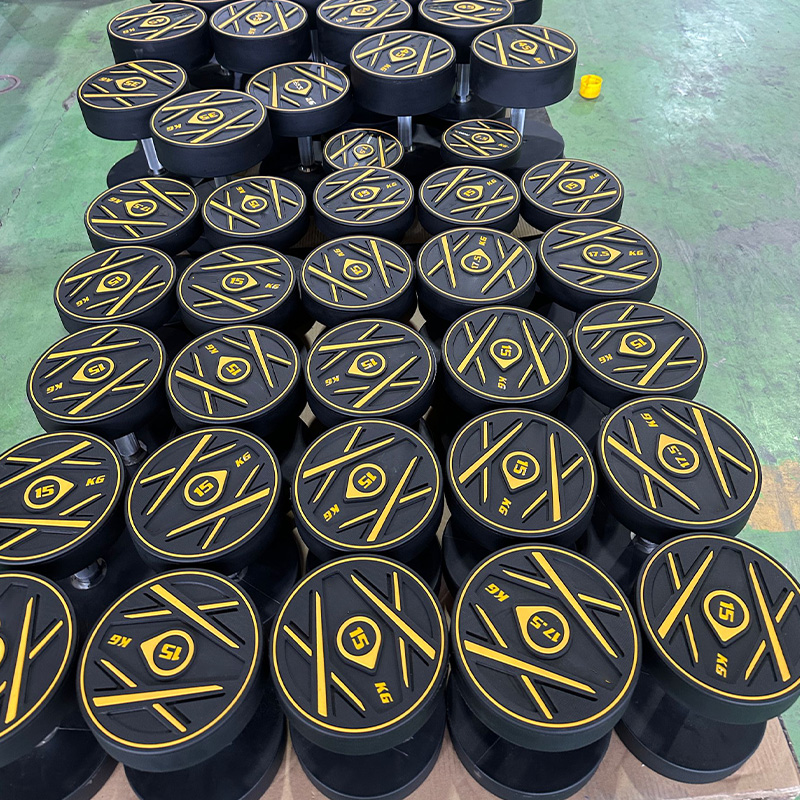
In commercial fitness environments, the durability of gym equipment directly impacts operational costs, user satisfaction, and the long-term reputation of the facility. Among the many choices available to B2B procurement professionals, the PU dumbbell has emerged as a consistently preferred option—not because of marketing trends, but because of measurable, practical performance advantages. Buyers across gym chains, hotel fitness centers, corporate wellness programs, and institutional facilities are increasingly specifying polyurethane-coated weights as their standard, and wear resistance is consistently cited as the primary reason.

Understanding why the PU dumbbell outperforms rubber and chrome alternatives in high-traffic commercial settings requires a closer look at material science, procurement economics, and the practical realities of daily gym operations. This article explores the core reasons B2B buyers are making the switch, the technical properties that make polyurethane the superior choice for wear resistance, and the operational logic that drives bulk purchasing decisions in professional fitness markets.
The Material Science Behind PU Dumbbell Wear Resistance
What Makes Polyurethane Different from Rubber
Polyurethane is a polymer with a molecular structure that gives it a unique combination of hardness and elasticity. Unlike rubber, which is derived from natural or synthetic latex and tends to degrade when exposed to oils, sweat, and cleaning chemicals, polyurethane maintains its structural integrity under repeated mechanical stress. When applied as a coating or molded form around a steel or iron core, the PU dumbbell benefits from this resilience at every point of contact—floor impact, rack placement, and hand grip.
Rubber dumbbells, while functional, are prone to surface cracking, flaking, and odor absorption over time. In a busy commercial gym where weights are dropped, stacked, and handled dozens of times per day, the wear on rubber coatings accumulates rapidly. The PU dumbbell, by contrast, resists abrasion at a significantly higher level, meaning the surface retains its appearance and structural integrity over a much longer service cycle. For procurement managers responsible for replacement budgets, this distinction translates directly into cost savings.
The hardness of polyurethane can also be engineered to specific durometer ratings, allowing manufacturers to calibrate the material's give and resistance based on application requirements. This engineering precision is not available with natural rubber, which has inherent variability in its physical properties. A well-specified PU dumbbell is therefore a more consistent and predictable product from a quality control standpoint.
Surface Integrity Under Repeated Impact
One of the most demanding tests for any dumbbell coating is the repeated impact scenario—equipment being set down firmly, dropped from a bench, or stacked with other weights on a rack. The surface of a PU dumbbell is designed to absorb and distribute these impact forces without chipping, cracking, or delaminating. This is a direct consequence of polyurethane's energy-absorbing molecular network, which deforms elastically under load and returns to its original shape.
Comparatively, chrome-plated and enamel-coated dumbbells are highly susceptible to surface damage from impacts. Once the outer coating chips or scratches, the underlying metal becomes exposed to moisture and oxidation, leading to rust formation that compromises both aesthetics and safety. The PU dumbbell avoids this failure mode entirely because the coating is both thick and chemically resistant. Facilities that have documented equipment lifecycles consistently report that polyurethane-coated weights outlast metal-finished alternatives by a significant margin.
This surface integrity also has hygiene implications that matter to B2B buyers. A damaged rubber or chrome surface creates micro-crevices where bacteria and fungal spores can accumulate. The smooth, non-porous surface of a quality PU dumbbell is far easier to disinfect and maintain to sanitary standards, which is an increasingly important procurement criterion for healthcare facilities, hotel gyms, and educational institutions.
Procurement Economics and Total Cost of Ownership
Upfront Cost vs. Long-Term Value
B2B buyers often encounter the objection that PU dumbbell sets carry a higher unit price than rubber or vinyl alternatives. While this is true on a per-unit basis, procurement professionals who assess total cost of ownership arrive at a very different conclusion. The superior wear resistance of polyurethane directly extends the usable life of the equipment, reducing replacement frequency and lowering the annualized cost per unit over a three-to-five-year procurement cycle.
Consider a scenario where a fitness facility replaces rubber dumbbells every two years due to surface degradation, odor issues, and cosmetic cracking. The same facility, equipped with a PU dumbbell range of equivalent weight, may achieve a five-to-seven-year service life with proper maintenance. The financial modeling consistently favors polyurethane when replacement labor, disposal costs, and operational disruption are factored into the calculation. Experienced procurement managers who have run these comparisons routinely specify PU as their default choice.
Beyond direct replacement costs, there are indirect savings associated with reduced maintenance requirements. A PU dumbbell does not require special conditioning treatments, re-coating, or odor management that some rubber products demand. The lower ongoing maintenance burden reduces staff time allocation and cleaning product consumption, which are genuine cost factors in large-scale facilities managing dozens of weight sets simultaneously.
Bulk Order Suitability and Consistency
For B2B buyers placing orders for multiple facilities or outfitting large gym floors, product consistency across batches is a critical requirement. The PU dumbbell manufacturing process, which involves precision molding and controlled material formulation, delivers a high level of dimensional and surface consistency across large production runs. This means that weight sets ordered six months apart will match in appearance and feel, which is important for professional gym environments where visual coherence and equipment standardization matter.
Rubber products, depending on their source material composition and manufacturing process, can exhibit batch-to-batch variation in color, texture, and hardness. This inconsistency complicates inventory management and creates aesthetic mismatches on gym floors. A PU dumbbell sourced from a quality manufacturer offers a level of uniformity that supports professional procurement standards and simplifies specification documentation.
Weight accuracy is another consistency factor that B2B buyers value highly. The dense, stable nature of polyurethane allows for precise weight calibration during manufacturing, meaning that a 20kg PU dumbbell is reliably close to its stated mass. This accuracy matters in professional training environments where users depend on consistent resistance levels for progressive programming.
Operational Advantages in Commercial Fitness Environments
Floor and Equipment Protection
A PU dumbbell offers meaningful protective advantages for the surfaces and infrastructure of commercial fitness facilities. When a polyurethane-coated weight contacts a rubber floor mat, the interaction between the two materials is less destructive than that between hard metal or degraded rubber and the flooring surface. The controlled elasticity of polyurethane minimizes indentation and surface scarring on gym floors, reducing flooring replacement costs and extending the life of protective matting systems.
Dumbbell racks are another point of contact where material quality becomes visible over time. Hard or irregular surfaces on cheaper dumbbells can scratch and gouge metal rack holders, creating noise, aesthetic damage, and eventually structural wear on the storage system itself. The smooth, consistent surface of a PU dumbbell sits cleanly in rack holders, reducing contact friction and protecting the storage infrastructure from unnecessary wear.
These protective qualities contribute to a cleaner, more professional facility appearance, which is a genuine business asset for gyms competing on the quality of their environment. Facilities that maintain high equipment standards command stronger membership retention and can support premium pricing in competitive markets. Procurement decisions that prioritize PU dumbbell quality therefore have a commercial dimension that extends beyond the equipment budget itself.
User Experience and Safety Considerations
The user-facing properties of a PU dumbbell also contribute to its B2B appeal. Polyurethane provides a grip surface that is firm without being abrasive, and its non-porous nature means it does not absorb sweat or harbor the odors that deteriorated rubber is notorious for producing. In shared commercial environments, where perception of hygiene and equipment quality directly influences member satisfaction and retention, these sensory qualities have measurable business value.
From a safety perspective, the structural integrity of a PU dumbbell reduces the risk of surface failure during use. Chipped or cracked coatings on older rubber or enamel weights present sharp edges and debris hazards that create liability exposure for facility operators. A well-maintained polyurethane surface does not degrade in the same catastrophic way, providing a more consistent safety profile over the equipment's service life.
Ergonomic factors also play a role. The even, smooth coating of a quality PU dumbbell supports consistent hand positioning and reduces grip fatigue compared to rough or irregular surfaces caused by coating degradation. For facilities serving high-frequency users, these ergonomic benefits reduce the likelihood of grip-related complaints and support a better overall training experience.
Specification and Sourcing Guidance for B2B Buyers
Key Specifications to Evaluate
When specifying a PU dumbbell for commercial procurement, buyers should evaluate several technical parameters beyond basic weight range. Coating thickness is a primary indicator of wear resistance—thicker polyurethane layers provide longer service life and better impact protection, though the coating must be applied evenly to prevent weight imbalance. Reputable manufacturers will provide coating thickness specifications and can demonstrate quality control procedures for their production process.
The core material of the PU dumbbell is equally important. High-quality cast iron or steel cores with proper surface preparation before coating application ensure strong adhesion between the polyurethane and the substrate. Poor adhesion leads to delamination over time, which undermines the durability advantage that motivates the purchase in the first place. Buyers should request samples and, where possible, conduct accelerated wear testing before committing to large orders.
Knurling on the handle is another specification point that merits attention. A PU dumbbell handle that incorporates appropriate knurling provides secure grip without relying entirely on the coating texture for traction. The depth and pattern of knurling should be evaluated in the context of the target user population—too aggressive for casual users, too shallow for performance-focused athletes. This balance is a quality differentiator that experienced buyers will test during the sample review process.
Supplier Qualification and Order Management
For B2B buyers operating at scale, supplier qualification is as important as product specification. The consistency of a PU dumbbell supply depends not only on the formulation quality but on the manufacturing discipline of the supplier. Buyers should assess production capacity, quality management certifications, and documented testing protocols before establishing a supply relationship for large orders.
Lead times and packaging specifications are practical order management factors that affect the total landed cost and handling efficiency of PU dumbbell procurement. Individual weight pieces should be packaged to prevent surface-to-surface contact during shipping, as transit damage is a common source of coating failure on delivery. Clear weight labeling and color-coded organization within sets simplify receiving, inventory management, and installation on the gym floor.
Warranty terms and post-sale support from a PU dumbbell supplier are also worth evaluating. A supplier who stands behind the wear resistance of their product with a documented warranty provides meaningful risk protection for the buyer. Warranty claims, while ideally infrequent, are a test of the supplier relationship, and buyers should clarify the claims process before placing initial orders.
FAQ
Why does PU dumbbell last longer than rubber in commercial gyms?
The polyurethane coating on a PU dumbbell is chemically resistant to sweat, cleaning agents, and oils, and it maintains structural integrity under repeated impact stress. Rubber, by contrast, oxidizes, cracks, and absorbs odors over time, especially under the intensive daily use patterns of commercial fitness environments. The result is a significantly longer service life for polyurethane-coated weights.
Is the higher price of a PU dumbbell justified for bulk procurement?
Yes, when evaluated on a total cost of ownership basis. The extended service life of a PU dumbbell reduces replacement frequency, lowering annualized cost per unit. Combined with reduced maintenance requirements and lower risk of surface-related safety incidents, the higher upfront investment delivers demonstrably better value over multi-year procurement cycles.
What commercial environments benefit most from PU dumbbell specification?
High-traffic facilities such as commercial gym chains, hotel fitness centers, university sports facilities, and corporate wellness centers gain the most from specifying a PU dumbbell. These environments involve intensive daily use, frequent cleaning, and high visibility standards—all conditions where the durability, hygiene, and aesthetics of polyurethane provide clear operational advantages over rubber or metal-finished alternatives.
How should B2B buyers verify the quality of a PU dumbbell before ordering at scale?
Buyers should request product samples for hands-on evaluation, focusing on coating thickness, adhesion quality, weight accuracy, and handle ergonomics. Where possible, an accelerated wear test—simulating repeated drops and cleaning cycles—provides objective data on surface durability. Reviewing the supplier's quality certifications, production documentation, and warranty terms further supports informed decision-making before committing to large-volume PU dumbbell orders.